We earn a commission if you buy through our links, at no extra cost to you.
Best Robot Vacuum for Area Rugs: What to Look For
Area rugs raise two questions: will the robot climb the edge, and will the mop wet the rug? Here are the specs that matter and four robot vacuums that handle rugs.
At a glance
For area rugs, the Roborock Saros 20 handles pile up to 1.18 in and detaches its mop on carpet. The Dreame X50 Ultra can remove mops or avoid carpets. The iRobot Roomba Max 705 Combo and Shark PowerDetect NeverTouch Pro keep the mop off rugs.
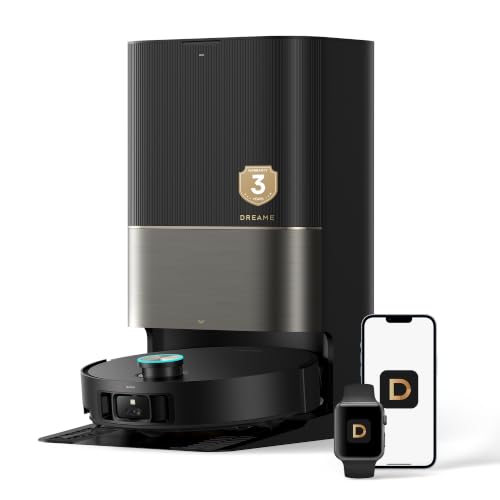


An area rug is a small test of everything a robot vacuum does. The robot has to climb a soft edge, hold suction on pile, keep its brush from eating the fringe and, if it mops, stay off the rug entirely. Floors of hardwood, tile or vinyl with a few rugs are common in American homes, and that is where most rug trouble starts. This guide covers the specs that decide how a robot handles rugs, then picks four models from our lineup. For the full ranking, see our best robot vacuums of 2026 comparison. If your home is mostly wall-to-wall carpet next to hardwood, our carpet and hardwood guide goes deeper on that mix.
We write from manufacturer pages and our own comparison of the published specs. We do not run our own measurements. Where a brand gives a figure, we say whose figure it is.
What Matters Most With Area Rugs
What the mop does on a rug. If the robot mops, this is the first question. A robot can remove its mops, detach them, lift the pad or avoid the rug in mop modes. A robot that does none of these leaves the rug protection to you.
Pile height. Rugs run from flat-weave and low-pile to plush and shag. Few brands publish a pile limit. Roborock does for the Saros 20, at pile up to 1.18 in, according to its product page. If a brand gives no figure, treat thick rugs as something to zone off.
Edge climbing. The rug edge is a small step. A higher crossing spec means fewer stalls, especially on rugs with a thick backing or a rug pad underneath.
Brush design. Fringe and long hair tangle in brushes. Rubber and anti-tangle designs help, but no brush is fringe-proof.
Navigation. A robot that maps the home and lets you draw no-go and no-mop zones gives you a safeguard that does not depend on a sensor guessing correctly.
Rug-Friendly Specs, Model by Model
Here is how the robots in our lineup describe their rug handling, in the manufacturers’ words.
- Roborock Saros 20: the mop is detached and the chassis is lifted to protect carpets from moisture, and a dynamic carpet cleaning mode adjusts body height for pile up to 1.18 in, according to Roborock. Its footnote says the feature has to be enabled in the app.
- Dreame X50 Ultra: Dreame says five modes customize cleaning by removing mops, avoiding carpets or boosting suction, and its page lists 1.65 in single-layer threshold crossing.
- iRobot Roomba Max 705 Combo: iRobot says it “automatically avoids carpets in vac + mop or mop cleaning modes”, and its roller mop has a protective cover to keep carpets dry.
- Shark PowerDetect NeverTouch Pro: Shark says Floor Detect “automatically avoids carpets while mopping” and that the robot keeps the pad above carpets. Its Active Lift & Lower feature lifts over thresholds and thick carpets, though Shark gives no height figure.
Keeping Rugs Safe and Tidy
Even the best carpet logic should not be your only safeguard. A few habits make a robot and an area rug get along.
- Draw no-mop zones on day one. In the app, mark every rug you care about. A zone does not depend on sensor accuracy.
- Run a vacuum-only pass on a new map. Watch how the robot crosses each rug before you ever add water.
- Tuck the fringe. Fold fringe under the rug or pick the rug up for the first few runs, then see whether the robot snags it.
- Flatten curled corners. A rug corner that curls up is a trip point. A non-slip rug pad or rug tape keeps edges down, and rug tape is a small fix that costs far less than a stuck robot.
- Check the dock approach. A rug in front of the dock can block the return. Keep the dock on hard floor with a clear runway.
Sealed hardwood and tile suit wet mopping best. Always read your floor maker’s care instructions before turning mopping on.
Roborock Saros 20: For Thick Pile and Mixed Floors
Detaches the mop on carpet and adjusts body height for pile up to 1.18 in, in the premium tier of our lineup.
The Saros 20 is our pick when rugs are thick. It is the only robot in the group with a published pile limit, and its AdaptiLift chassis also crosses double-layer thresholds up to 3.46 in, according to Roborock. That covers a rug on top of a rug pad and the odd door track. The dock washes mops with water up to 212°F.
The caveats: the carpet function has to be switched on in the app, 1.18 in is a ceiling and not a promise, and the robot and dock are the heaviest in our lineup. See the Saros 20 profile for the full notes.
Dreame X50 Ultra: For Rugs You Never Want Wet
Can remove its mops, avoid carpets or boost suction, and crosses 1.65 in single-layer thresholds, so rug edges rarely stop it.
The X50 Ultra suits a home with many rugs of different kinds. Dreame says the robot picks between removing mops, avoiding carpets and raising suction, and its page also describes avoiding yoga mats and play mats so they stay dry. Removal is the most reliable way to protect a rug because the mop is simply not there.
Dreame notes its crossing figure is for single-layer thresholds, so stacked rugs and pads are a bigger ask. The dock also has a footprint to plan for. Our X50 Ultra profile covers it in detail.
iRobot Roomba Max 705 Combo: For Simple, Predictable Rug Rules
Avoids carpets whenever it mops, with a protective cover on the roller mop and Carpet Boost for vacuuming.
The Max 705 takes the plainest approach: in vac plus mop or mop modes, iRobot says it avoids carpets. That is easy to understand when you have a few valuable rugs and do not want to manage zones constantly. The anti-tangle dual rubber brushes are designed for pet hair, according to iRobot, which helps on rugs where hair settles.
Because it avoids carpets in mop modes, it will not mop a rug you would like mopped, and iRobot’s page does not give a pile limit. Read the Roomba Max 705 Combo profile for the rest.
Shark PowerDetect NeverTouch Pro: Floor Detect for Hard Floors With Rugs
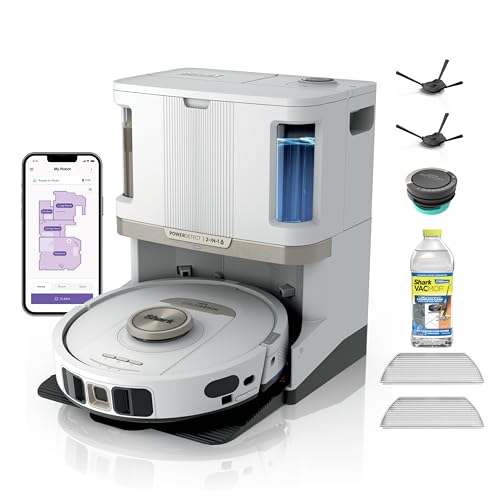
Floor Detect and an active lift keep the mop pad above carpets, and the base empties, refills and washes the pads on its own.
Shark says Floor Detect detects floor types and avoids carpets while mopping, and that Active Lift & Lower lifts over thresholds and thick carpets. That makes it a fit for a hard-floor home with several low or medium rugs and a wish for few consumables, since the base has a bagless 60-day debris bin, according to Shark.
Shark gives no lift height or pile limit, so for very thick rugs compare with the Saros 20. See the Shark NeverTouch Pro profile.
What We Left Out
We did not pick the Roborock Q7 M5+: its page lists Auto Boost on Carpet for suction but does not describe a mop that lifts, so you would remove the pad or use zones. The eufy Omni C20 works for medium-pile rugs, but eufy says it is not meant for carpets over 0.98 in thick.
Before You Order
- Measure the thickest rug and its edge, including any rug pad.
- Find a published pile limit, or plan zones for thick rugs.
- Decide whether you want the robot to remove, detach, lift or avoid.
- Tuck fringe and flatten curled corners.
- Set no-mop zones on day one and watch the first vacuum run.
Sources
Frequently asked questions
What is the best robot vacuum for an area rug?
It depends on the rug. For thick pile, look for a published pile limit, as Roborock gives for the Saros 20 (up to 1.18 in). For rugs you want kept dry, pick a robot that removes, detaches or avoids when it mops, such as the Dreame X50 Ultra, Roomba Max 705 Combo or Shark NeverTouch Pro.
Will a robot vacuum and mop soak my area rug?
Not if it is built to keep the mop off carpet and you leave that behavior switched on. iRobot says the Max 705 Combo avoids carpets in mop modes, and Shark says its robot keeps the pad above carpets. Still draw a no-mop zone around any rug you care about.
Can a robot vacuum get over the edge of a rug?
Most can handle a low edge, and the climbing spec tells you how much. Dreame lists 1.65 in single-layer thresholds for the X50 Ultra, and Roborock lists a 3.46 in double-layer threshold for the Saros 20. Curled corners and thick shag are the usual trouble spots.
Do fringed or shag rugs work with a robot vacuum?
They are the hardest case. Fringe can wrap around brushes and wheels, and long pile can stall a robot. Tuck fringe under the rug, check the pile limit for your robot, or draw a no-go zone and vacuum that rug by hand.
Should I get a robot without a mop if I have lots of rugs?
A vacuum-only robot is the simplest way to rule out wet rugs. If you want mopping on the hard floors, choose a model that lifts, detaches or avoids on its own, and set zones as a second safeguard.